


Beta 3 is live
Silicon Pirates, the homelab simulator game
Silicon Pirates is a server rack and homelab simulator you play in your browser. Your lab is a room in 3D. You start with $5,000 in Lab Credits, a 12U rack and four crates on the rug in the main room.
Rack the machines, wire them to power and to the network, and they earn while they run. Hardware heats up and wears out. Bills come due. The internet line can drop. It is free, and there is nothing to install.
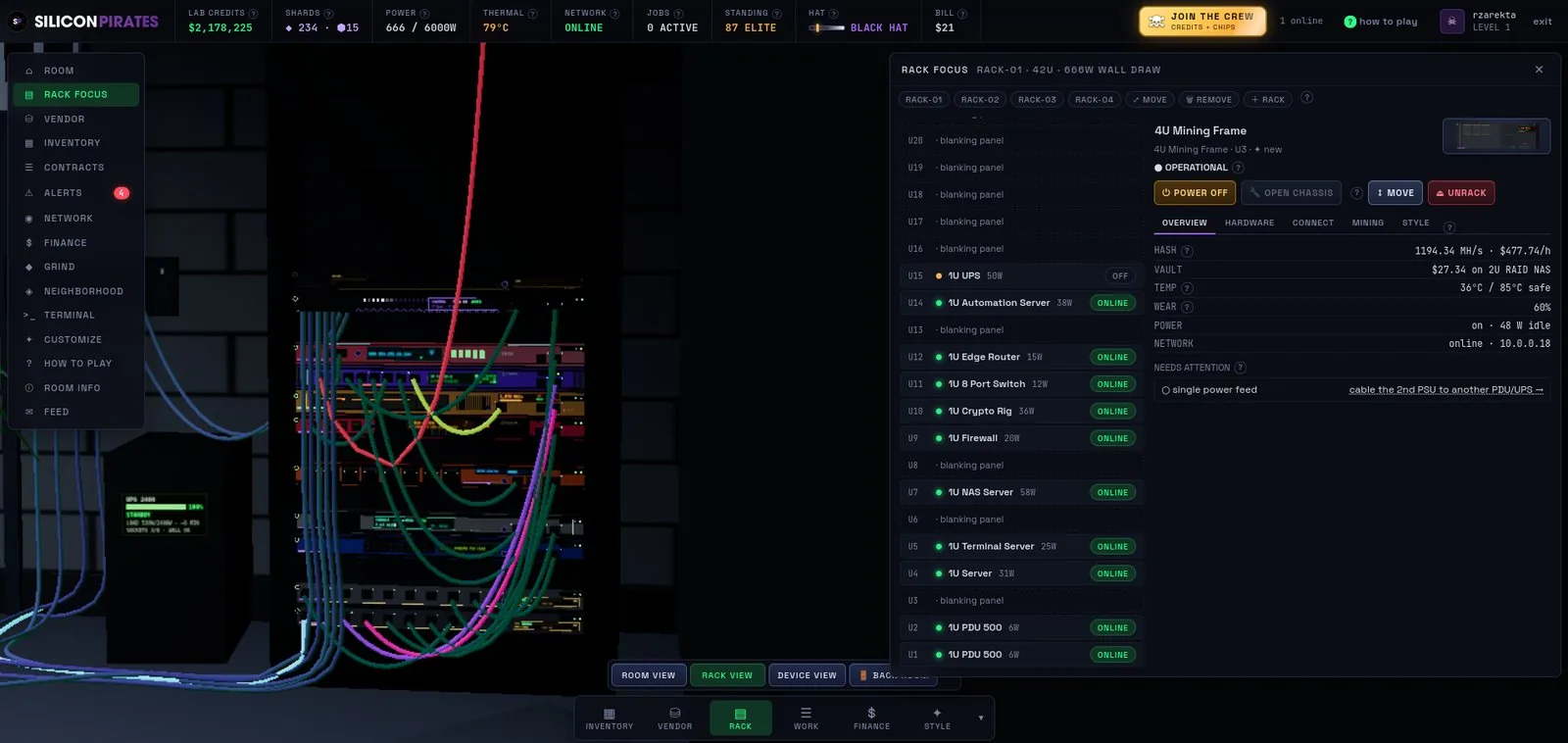
Coming soon: holographic crew stickers
Silicon Pirates stickers on rainbow holographic film. Coming soon.
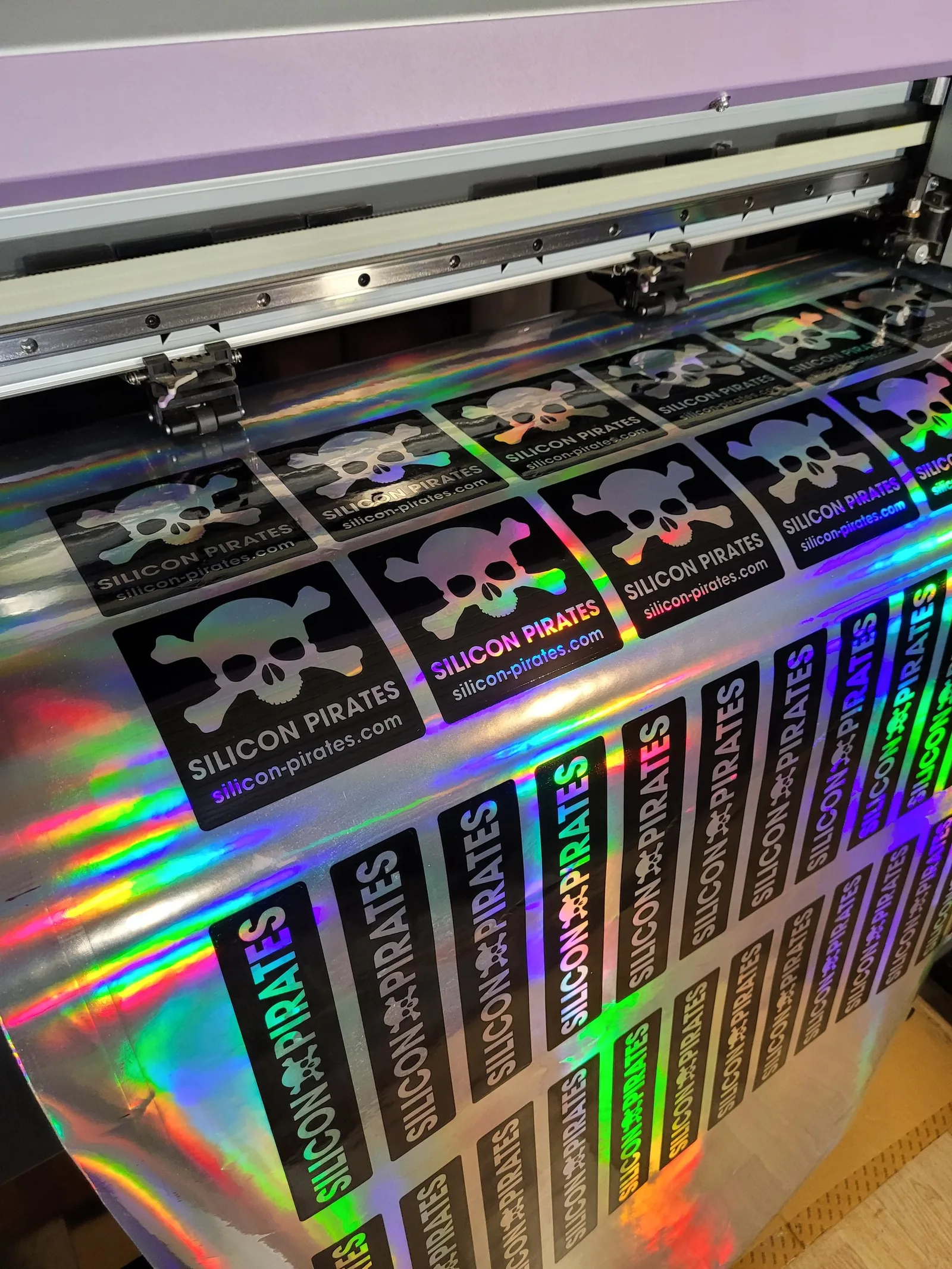


Beta 3 is live
Beta 3, the 3D version
Beta 3 has replaced Beta 2 at the same address. Make a free account with a handle and a passphrase, and your lab is saved on the server from the first minute.
The World Update, v0.5 Early Access
The next major update expands the game beyond the homelab into a much larger, connected world, and moves Silicon Pirates out of Beta and into Early Access. Hopefully within the next week or two.
Your login still works
Sign in with your Beta 2 email or username and the same password. You start a fresh lab: racks, cash and Chips from Beta 2 do not carry over.
Build it. Break it. Defend it.
Build it
Buy PDUs, UPS units, routers, switches, firewalls, NAS boxes, servers and crypto rigs. Crates land on the rug in the main room. Rack each one, run its power cord and its network cable, and switch it on. Cable a router to the ISP box on the wall and the lab is online.
Break it
Every wall circuit has a breaker and every PDU has a rating. Push past it and it trips, or catches fire. Parts wear and fail. Machines fault and give you a minute or two to answer. Let a drive die past what the array survives and the data goes with it.
Defend it
Being online draws heat. A firewall, the router and the switch settings add up to your security posture. Hackers try the door when the heat climbs. Keep a UPS behind what matters and a second internet line for when the first one drops.
What is in Beta 3
- Three rooms. The Main Room, a Back Room that opens after 10 work orders, and the Basement, earned at 30 work orders and bought for $12,000.
- Racks you pick. 6U, 12U, 20U and 42U models, in any room you own.
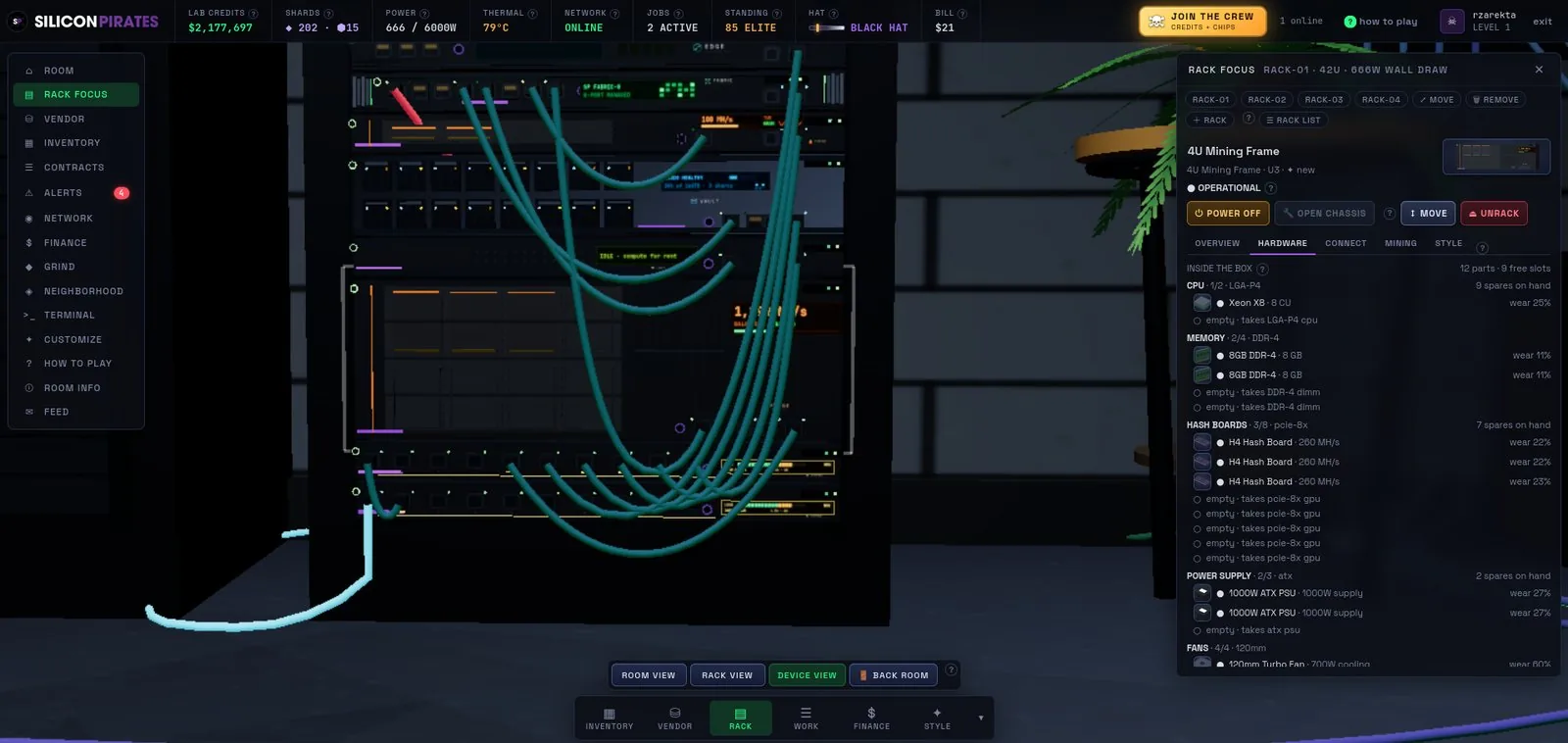
- Machines you open. Every device is a chassis of parts: processors, memory, drives, power supplies, fans and hash boards. Swap them on the workbench.
- Power. A breaker box with a main breaker and a grid service to upgrade, two wall circuits a room, PDUs in three tiers, rack UPS units, power strips and a house battery on the floor.
- The internet. An ISP box on the wall, four plans, monthly invoices and outages. A second line from another carrier and dual WAN on the router keep you online.
- Networking. DHCP, name servers with your own domain, an 8-port and a 24-port switch, and patch panels that carry a wire between racks and rooms.
- Storage. NAS units with RAID 0, 5 and 6, shares, and backup mirrors that survive a dead array.
- A terminal. A shell at your desk with files, scripts and cron. Anything the inspector can do, the terminal can do.
- Income. Compute rental, hosted services with tenant seats, crypto mining, 24 client contracts in four tiers and daily work orders.
- Markets. Six coins on one exchange shared by every player, plus the street, the town and exotics. Mined coins go to a wallet with your own address.
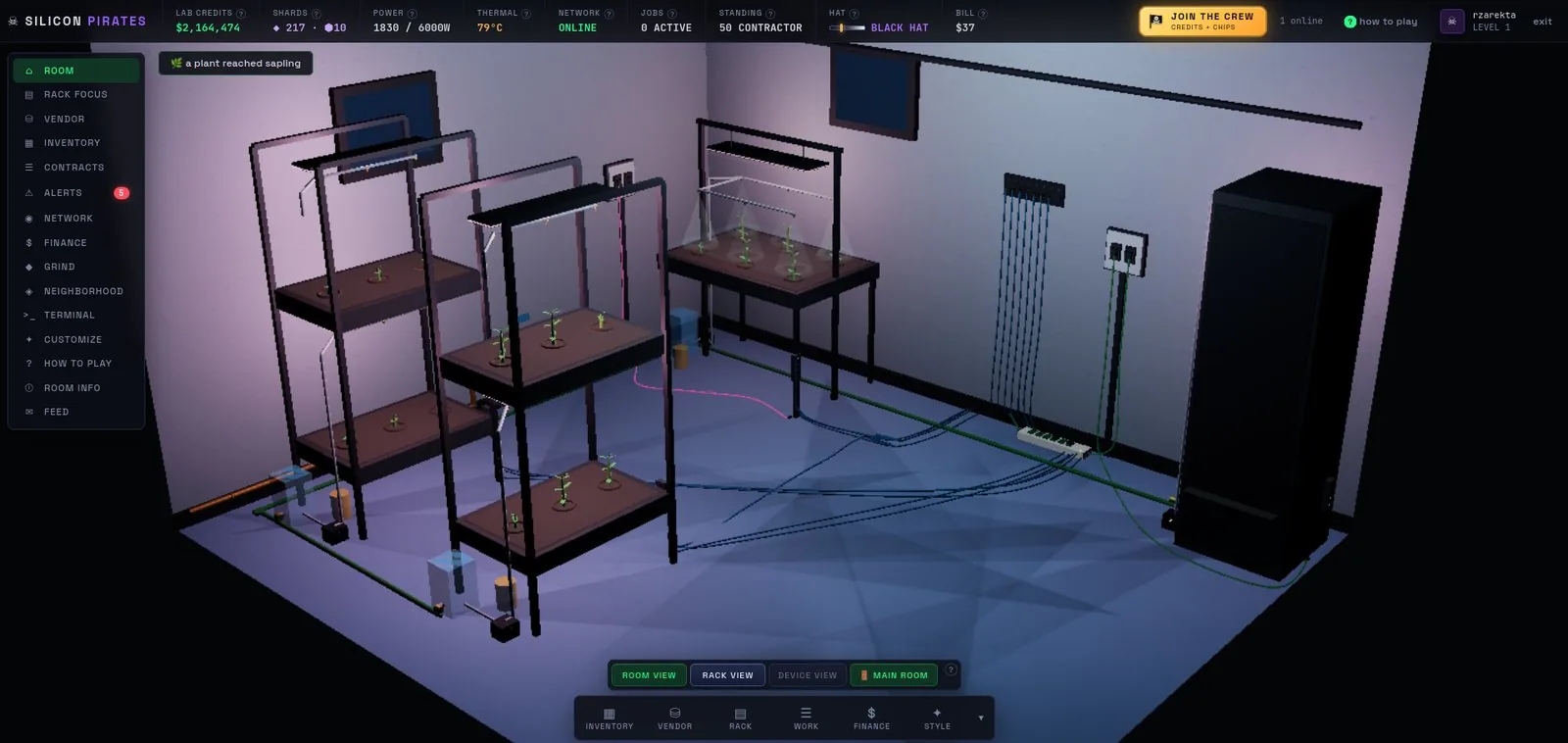
- Farming. Grow beds on a light schedule, water through hoses from a metered tap, eight vegetables and the crosses you breed.
- Automation. An automation server that switches lights, pumps, fans and devices through control cables, by timer or by rule.
- The net. Companies to scan from your terminal. Break in past eight kinds of lock, or report the flaws for a bounty.
- The arcade. RACK ATTACK, a cabinet with four games on a board of ROMs, and one high-score board for every player. Uplink modules play DOOM and Wolfenstein 3D from your own game files.
- Your room, your way. Themes, lights, posters, a paint easel, neon signs, an aquarium of fish to feed and a vending machine with a digital screen that shows your own words.
- Other labs. Visit other operators, sign their guestbook, send a gift or chat. You decide how far visitors get in yours.
Screenshots
Taken in Beta 3. Select one to enlarge it.
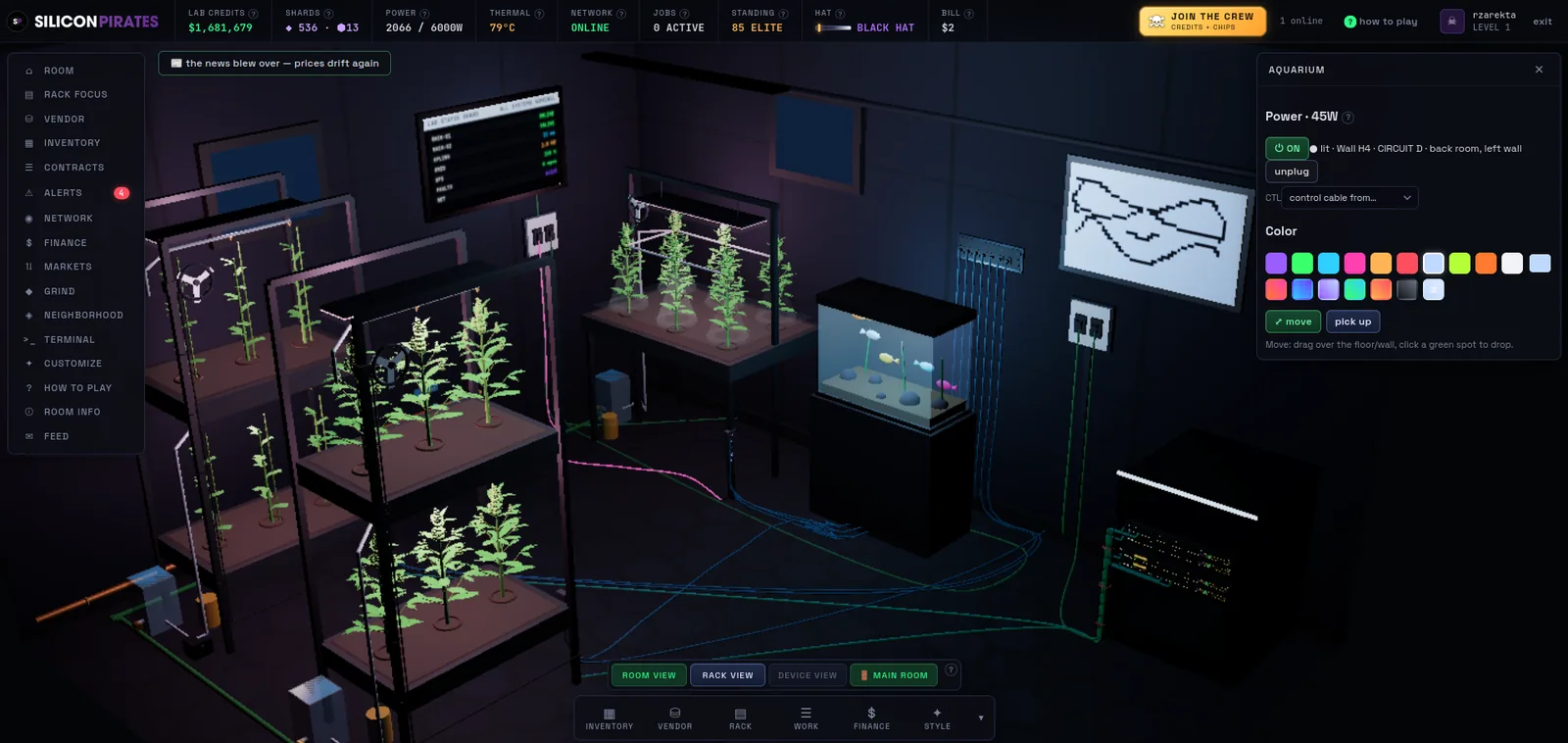
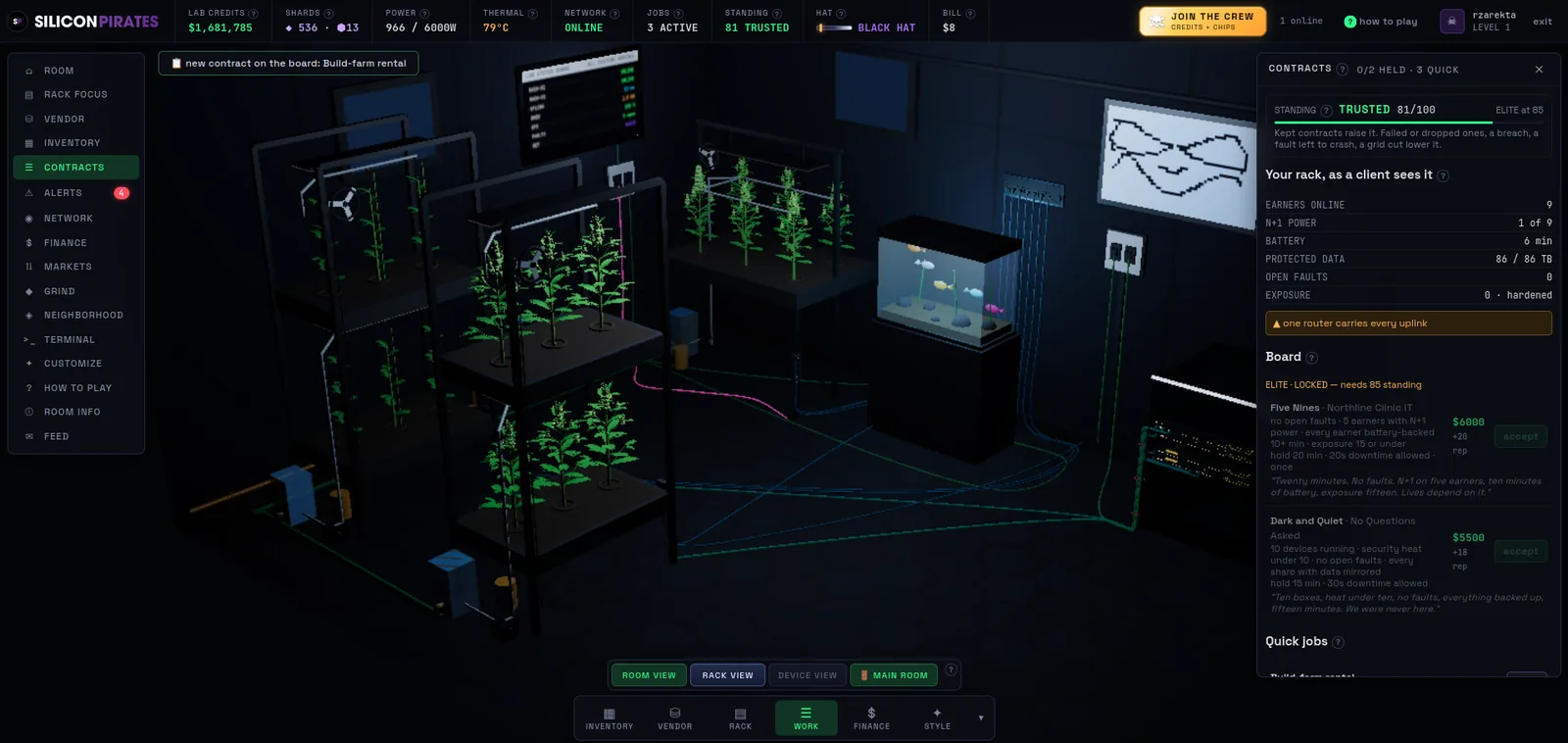
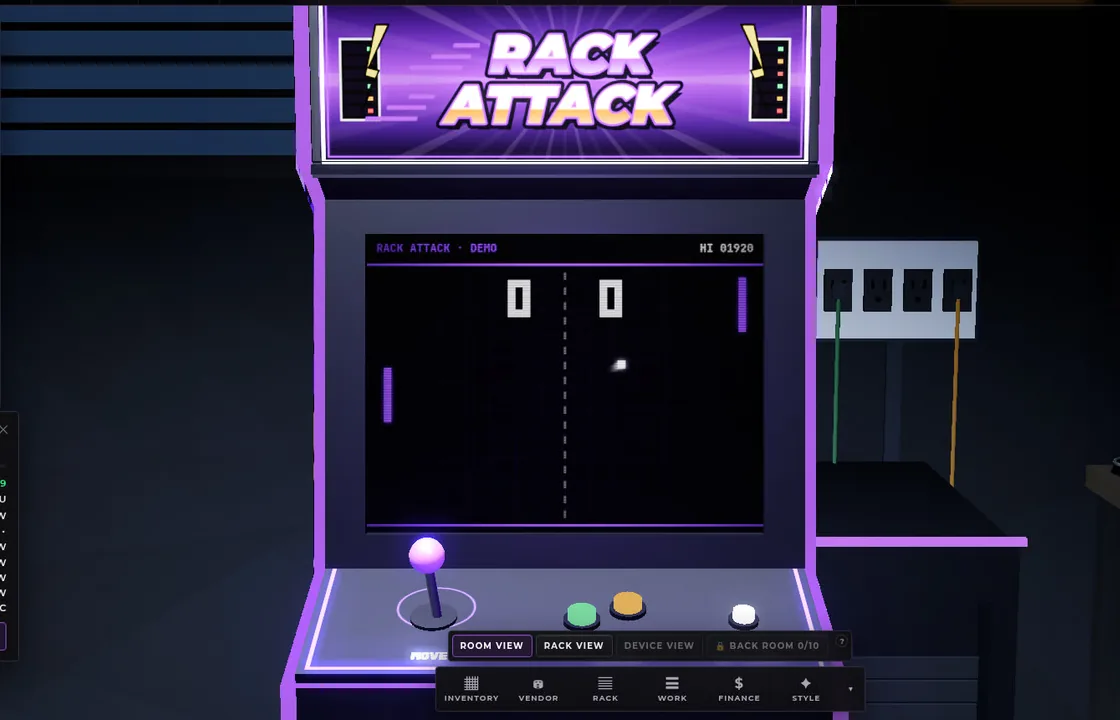
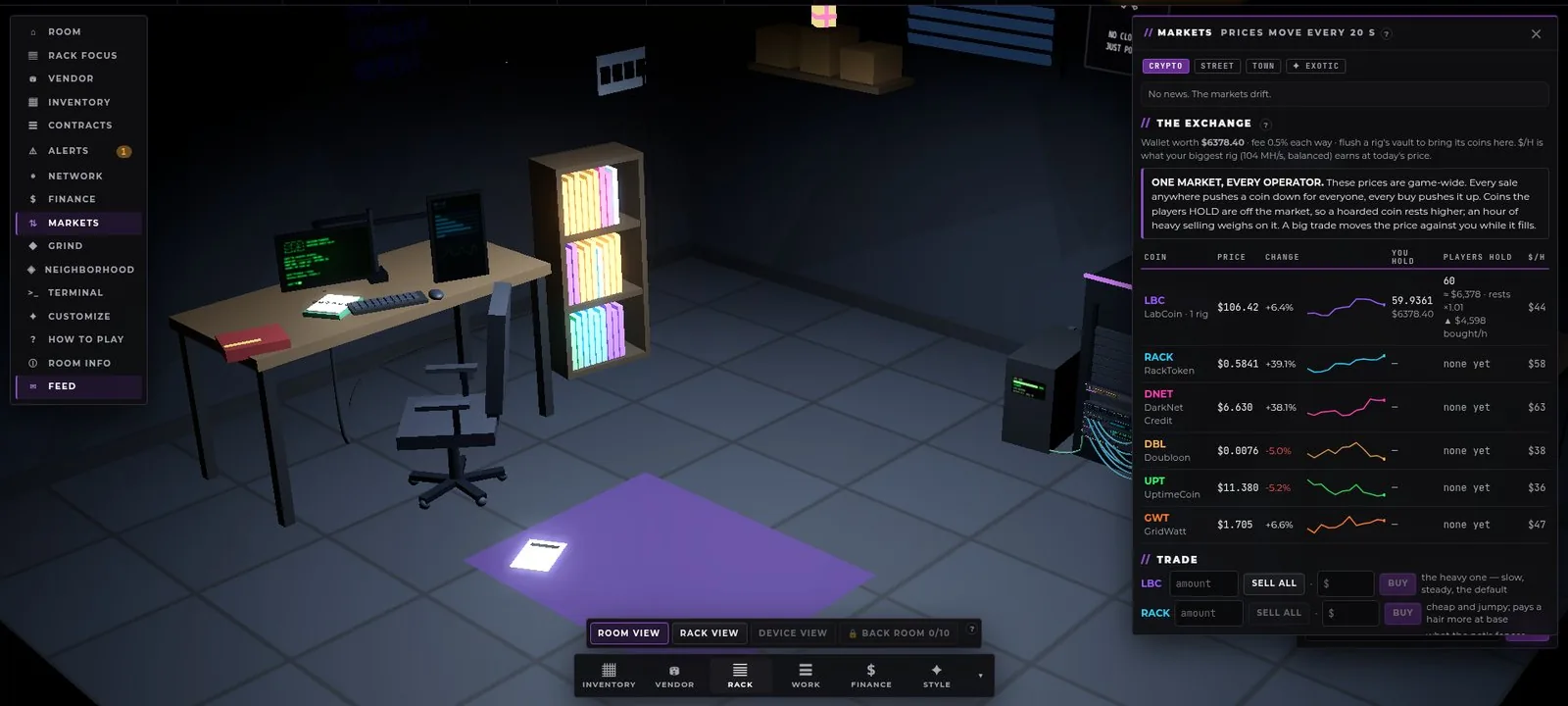
What changed from Beta 2
- 3D rooms. The flat rack screen is now a lab you walk around, with a desk, a workbench and rooms to add.
- An account. Playing needs a free account. Beta 2 logins work, and every lab starts fresh.
- One page. The same address runs on a desktop and on a phone. The separate phone version is gone.
- Parts. Upgrades are parts you fit on the workbench, not buttons in a menu.
- The internet. Your uplink is a line from an ISP, with a plan and a monthly invoice.
- Hacking. You break into companies on the net from your terminal. Raids on other players, the player marketplace, the school and the house games stayed with Beta 2.
The World Update: v0.5 Early Access
Silicon Pirates keeps growing. The upcoming World Update expands the game beyond the homelab and into a much larger, connected world, and moves it out of Beta and into Early Access as v0.5, hopefully within the next week or two.
The trailer shows Beta 3 as it runs today, then the version being built now. After v0.5 come the Infrastructure, Underground, Network and Connected World updates, then v1.0, when it is ready.
Learn the game
Quick start guide
Your first hour: unpack the crates, wire the power, get online, take a job.
Read the guideService manuals
A manual for every device in Beta 3, from the 1U PDU to the 4U mining frame.
Browse the manualsGame systems
Power, the internet, storage, faults, contracts, markets, farming and the net.
Read the referenceWhat's new in Beta 3
What changed from Beta 2, every screenshot, and how to donate.
See what's newHomelab simulator games
What is out there, how the games differ, and where this one fits.
Read the rundownRoadmap
What is live in Beta 3 and what comes next.
See the roadmapOther operators
A free account
Pick an operator handle and a passphrase. Your lab lives on the server, so it is waiting for you on any computer or phone you sign in from.
Visit other labs
Walk into another operator's room and look around, sign the guestbook or send a gift that arrives as a crate on their mat. Your own door decides who comes in, which rooms they see and what they may touch.
One shared world
Every player trades the same six coins, so a big sale moves the price for everyone. The arcade keeps one high-score board for the whole game. Talk to other players on r/SiliconPirates.
The game in numbers
Live from the game server, every lab added up. The figures refresh a few times an hour.
What players say
Notes other operators left in the guestbook of the developer's own lab, in their own words.
Yo this game is craazy, it has evolved a lot and i really love it, keep it up, also love your room.
Love this game
Nice racks
Also nice grow room in the basement
ChickenAirForce · 3 notesSick place!
Cry5talzepic sauce
ashtongood work
woz
Every lab has a guestbook by the door. Visit a lab and leave a note of your own.
Questions
What is Silicon Pirates?
Silicon Pirates is a homelab and server rack simulator game that runs in a web browser. Your lab is a room in 3D. You rack machines, wire them to power and to the network, and they earn while they run. Hardware heats up, wears out and faults, bills come due, and the lab has to stay online.
Is Silicon Pirates free?
Yes. Silicon Pirates is free to play and there is nothing to install. Chips, the premium token, are earned by playing. Donations are optional and pay for the servers.
Do I need an account?
Yes. Beta 3 keeps your lab on the server, saved against your account. Registering is free and takes an operator handle and a passphrase.
I played Beta 2. Can I still sign in?
Yes. Sign in with your Beta 2 email or username and the same password. You start a fresh lab. Nothing else from Beta 2 carries over.
What changed from Beta 2?
Beta 3 is a rebuild in 3D. Your lab is a set of rooms you walk around, every machine is a chassis of parts you can open, and the internet comes from an ISP you pay. Raids on other players, the player marketplace and the school did not come across. What's new in Beta 3.
Does it work on a phone?
Yes. The same page runs in a desktop or a phone browser. A full lab is easier to run on a bigger screen.
Do I need to know networking or servers to play?
No. The game starts you with four crates and a welcome paper that walks you through the first hour. Every device has a manual on the bookshelf in your room and on this site. Start with the quick start guide.